


In a sharp escalation of his long-running conflict with much of the mainstream press, President Donald Trump announced on September 18 that CNN, MS NOW (the rebranded MSNBC), and Politico are banned from the White House “effective immediately.” The move, detailed in a Truth Social post, cited the outlets’ “constant ‘reporting’ FAKE NEWS” and warned that other organizations could follow.
Opinion: The Difference Between Opinion and Propaganda. How Legacy Media Became Propagandists
Trump later told reporters in the Oval Office that the decision was cumulative, driven by years of what he called purposely negative and dishonest coverage. “There’s something wrong with a country that can allow people to write purposely negative stories,” he said. “Now, if they want to write them, that’s fine, but I don’t have to let them into… the people’s house.” He added that the United States needs a “fair press” and that he was “sick of it.”
The ban was enforced over the weekend. Reporters from the three outlets who attempted to enter White House grounds had their credentials confiscated by the Secret Service and were turned away.
On September 21 the banned organizations filed a federal lawsuit in Washington, D.C., seeking a temporary restraining order to restore access. In a joint statement they called the revocation of credentials “without notice or process” a “direct assault on the First Amendment” and argued that the government cannot decide what the press reports.
The television press pool—ABC, CBS, NBC, Fox News, and CNN—responded by suspending its rotating coverage of presidential events. CNN had been scheduled to handle pool duties that day; when it was barred, the other networks declined to fill in. The result was limited independent video of certain White House events, including the unveiling of a new helipad.
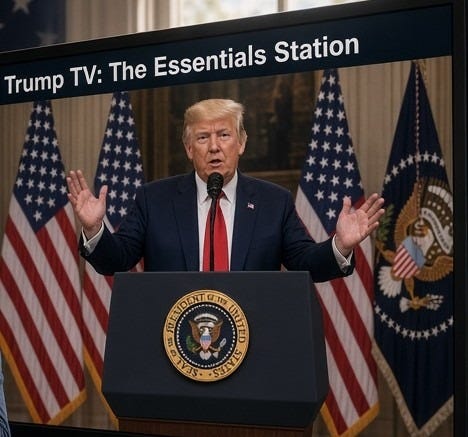
This evening the White House unveiled Trump TV: The Essentials Station, a 24/7 streaming feed available on the official White House YouTube channel and website. Officials described it as a continuous loop of “top videos, major remarks, and must-see highlights” of the administration, updated in real time. The stream launched with older footage, including a July speech at Mount Rushmore, and is positioned as a direct way for the public to see administration moments that, in the White House’s view, often receive incomplete or distorted treatment elsewhere.
White House messaging framed the channel as a practical response: “Not every big moment has made it on your TV, now it can.” A spokesperson characterized it as an “unfiltered” collection of the administration’s “greatest hits” rather than a conventional newscast with anchors or commentary.
The developments mark a further shift away from traditional media gatekeeping. Trump has long argued that large segments of the press function more as political actors than neutral observers.
Critics of the ban, including the affected outlets and some editorial boards, call it an unconstitutional restriction on press access. Supporters counter that physical access to the White House has never been an absolute right and that presidents retain discretion over who is hosted on the grounds—especially when coverage is viewed as systematically hostile.
As the lawsuit proceeds and networks maintain their suspension of pool coverage, Americans now have an additional, government-operated option for primary-source video of the administration’s activities. Whether Trump TV becomes a lasting fixture or a temporary workaround will depend on the courts, the networks’ next moves, and the public’s appetite for unmediated presidential content.