


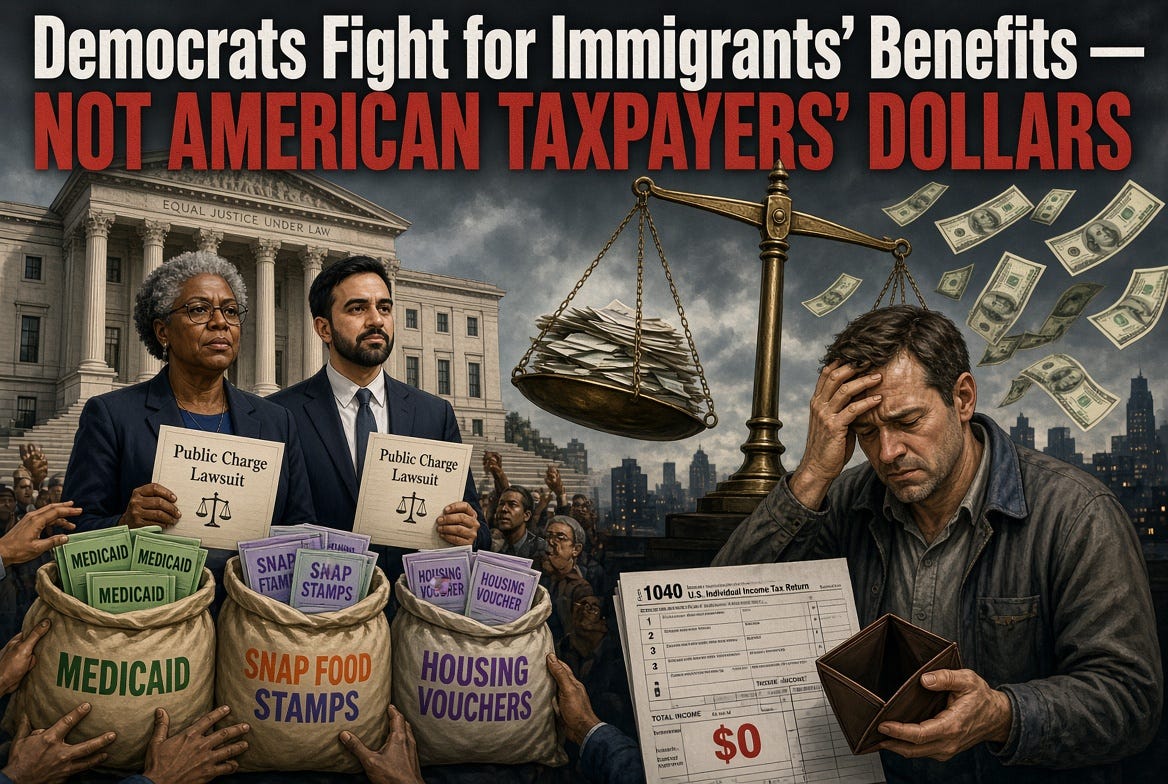
New York Attorney General Letitia James and New York City Mayor Zohran Mamdani have once again rushed to court—this time to block a common-sense Trump administration update to the longstanding “public charge” rule. The rule change, set to take effect shortly, would allow immigration officials to consider an applicant’s use of non-cash public benefits such as Medicaid and SNAP (food stamps) when deciding whether to grant green cards or certain visas to legal immigrants. In other words, it asks a basic question: Should people seeking permanent residence in the United States demonstrate they are unlikely to become long-term wards of the American taxpayer?
James is leading a multistate coalition, while Mamdani heads a group of cities, both arguing the rule oversteps authority and will scare families away from needed help. Their rhetoric frames it as an attack on hardworking immigrant families. What it really reveals is a familiar pattern: Democratic officials pouring legal resources and political capital into defending expansive access to taxpayer-funded benefits for non-citizens, while the costs to American citizens and legal residents mount.
The public charge doctrine is not new or radical. U.S. immigration law has long barred admission or adjustment of status for those likely to become primarily dependent on government assistance. For decades, the focus stayed narrow—mainly cash welfare. Expanding it to include major means-tested programs like Medicaid and food assistance simply updates the standard to match modern reality. Legal immigrants who rely heavily on these programs impose real fiscal burdens. Taxpayers already fund substantial safety-net spending; adding more long-term dependents through immigration policy is not compassion—it is a transfer of resources away from citizens who built and fund the system.
James and Mamdani’s lawsuits treat any effort to limit that dependency as illegitimate. They warn of a “chilling effect” that will make people forgo care or food. Yet the rule does not strip benefits from those already eligible, nor does it target undocumented immigrants (who are largely barred from most federal benefits anyway). It applies to those seeking the privilege of permanent legal status. Self-sufficiency has always been a reasonable expectation for that privilege. Prioritizing continued easy access to benefits over that principle signals that the primary constituency is not the American taxpayer whose dollars underwrite the programs.
This fits a broader Democratic posture. Officials like James have repeatedly sued or resisted policies that enforce immigration limits, secure borders, or condition benefits and status on self-reliance. The energy expended on these fights stands in contrast to the relative quiet on the fiscal strain these policies create for working Americans—higher taxes, stretched public services, and competing claims on limited resources in cities already facing budget pressures. When the choice is between safeguarding taxpayer dollars and expanding the pool of potential beneficiaries among non-citizens, the lawsuits make the priorities clear.
Americans of all backgrounds benefit from a generous immigration system that admits people prepared to contribute rather than consume. Requiring evidence of self-sufficiency is not cruelty; it is responsible stewardship. James, Mamdani, and their allies are free to disagree. But their immediate resort to litigation against a rule that protects the public underscores a persistent political reality: for too many Democratic leaders, fighting for non-citizens’ appears more urgent than defending the interests of the citizens who pay the bills.