


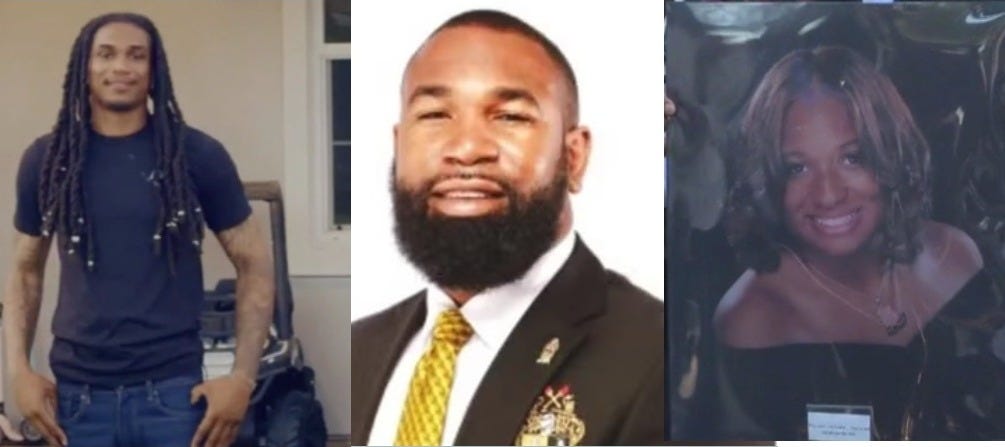
Families of Compton shooting victims demand action after deadly Fourth of July weekend: “When are we going to stop?”
In the aftermath of yet another bloody Independence Day in Compton, grieving families and community leaders are issuing a desperate plea that cuts through the usual political noise. Two separate shootings during July 4 celebrations claimed three lives: community activist Eric Washington, 19-year-old UNLV nursing student Meah Bordenave-Jenkins, and 38-year-old Thaddeus Clark.
At vigils and press gatherings, voices from the community spoke plainly. Kenneth Clark, uncle of Thaddeus, didn’t mince words: “This community of Compton gotta wake up. Black men gotta wake up.” He pointed directly to the pattern of violence plaguing the neighborhood and, remarkably, called on President Donald Trump to send in the National Guard.
This isn’t abstract statistics or partisan talking points. These are real people— a young woman pursuing a career in healthcare, a dedicated community advocate trying to make things better, and a family man whose life ended at a holiday block party. Their deaths highlight a painful reality that too many urban neighborhoods confront year after year: the overwhelming majority of Black homicide victims in America are killed by other Black perpetrators, often in cities long governed by Democrats.
Data from the FBI and CDC consistently show that in major cities, Black-on-Black crime accounts for the bulk of violent deaths within Black communities. In Los Angeles County, homicides and shootings spike in specific pockets like Compton and South LA, driven by gangs, drugs, retaliation, and the breakdown of family structures. Yet for decades, the conversation has been derailed by accusations of racism whenever anyone highlights these uncomfortable facts or proposes aggressive intervention.
Compton’s leaders calling for the National Guard represent a breaking point. When local authorities and soft-on-crime policies fail to deliver safety, residents turn elsewhere. They want results, not more excuses about “root causes” that never seem to produce safer streets. Deploying the National Guard isn’t a perfect or permanent fix—troops can’t raise responsible fathers, instill discipline in schools, or replace cultural norms that glorify violence. But it can provide immediate deterrence, restore order, and buy time for longer-term reforms.
Critics will cry “militarization” or “racism.” The same voices who cheered protests and bail reform while bodies piled up now recoil at the idea of federal help when Black leaders themselves request it. This reaction reveals the hypocrisy: protecting Black lives only matters when it fits a narrative blaming external forces rather than confronting internal failures—fatherlessness rates above 70% in many urban areas, failing schools, and a street culture that settles disputes with gunfire.
President Trump has previously signaled willingness to support law-and-order measures in high-crime cities. If Black leaders in Compton are explicitly asking for National Guard assistance to halt the bloodshed, that request deserves serious consideration over performative outrage from distant pundits. Local police need backup when gangs and shooters operate with impunity.
True compassion means prioritizing the innocent victims—children growing up in fear, parents burying their kids—over political optics. Meah Bordenave-Jenkins won’t finish nursing school. Eric Washington won’t advocate for more housing or peace. Thaddeus Clark won’t see another family gathering. Their deaths demand more than hashtags and candlelight vigils.
Compton’s call should echo nationwide: Stop the denial. Address the violence tearing apart Black communities with honesty and resolve. Safety is a prerequisite for everything else—economic opportunity, education, and hope. If that requires temporary federal intervention, so be it. Enough with the cycle of mourning and forgetting until the next holiday turns deadly.
The families of Thaddeus, Meah, and Eric are watching. So is the rest of America.