


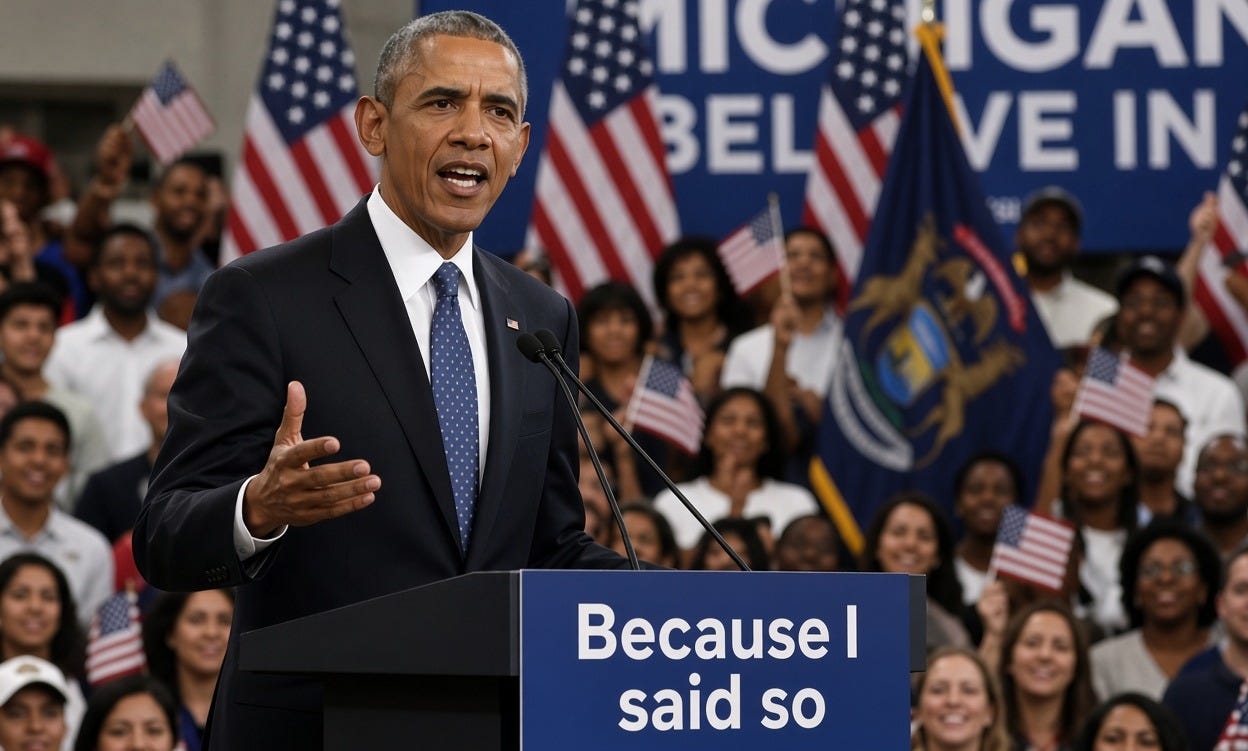
In American politics, few spectacles are as predictable—and as insulting—as the assumption that Black voters exist primarily as a captive bloc to be directed by Democratic royalty. Barack Obama, the former president who still casts a long shadow over the party, continues to campaign as if his endorsement is a command.
Obama to campaign with El-Sayed and Benson in Michigan
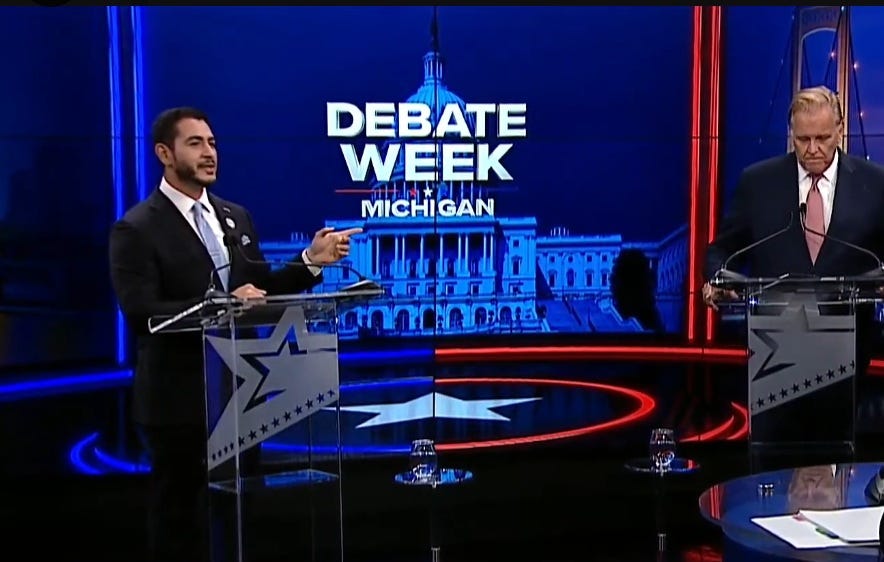
The Michigan Senate race between Abdul El-Sayed and Mike Rogers offers the latest stage for this dynamic. Obama has backed the Democratic candidate, Abdul El-Sayed, for Michigan’s open Senate seat. The media and the party act like Black voters in Detroit, Flint, and the rest of the state will simply fall in line. The message is plain—loyalty to whoever Obama picks is expected.
Asking “Are Blacks mandated?” is the blunt way of calling out what a lot of people still assume. It’s crude, but it matches the attitude that treats Black citizens less like free voters and more like a group that gets told where to go and what to do.
Black voters in Michigan have given Democrats huge margins for years. That’s a fact. In the 2020 presidential election, exit polls showed roughly 92% of Black voters in Michigan supported Joe Biden. High turnout in cities like Detroit helped deliver the state. In 2024, that number slipped but remained very high: CNN’s exit poll put Black support for Kamala Harris at 87%, with only 11% going to Trump.

El-Sayed has a real problem with Black voters, and that is exactly why Obama is showing up. In the Democratic primary, El-Sayed lost Detroit and most majority-Black areas by wide margins to the more moderate Haley Stevens. Recent polls still show the gap: a Washington Post survey found 83% of Black voters in Michigan want Democrats to keep the Senate, but only 67% support El-Sayed.
Some Black voters say he feels unfamiliar, that he has not done the work in their communities, or that he seems to assume their votes are automatic. Obama’s planned appearance in Detroit is not a victory lap—it is an attempt to paper over that soft support and tell Black Michiganders they should fall in line behind the party’s nominee.
Abdul El-Sayed Criticized Obama for Years. Now They’re Campaigning Together
For years, Black voters in Michigan have delivered overwhelming majorities to the Democratic Party. However, treating this historic loyalty as an automatic guarantee—one that can be secured by a few celebrity campaign stops—reduces individuals with real-world struggles to a political monolith. Voters face everyday challenges like inflation, underfunded schools, crime, and economic stability. Black Michiganders have every right to judge Abdul El-Sayed and Mike Rogers on those things instead of whatever leftover shine Obama still has.
Party strategists and some writers still talk like the Black vote is a fixed asset Obama can hand out. That doesn’t flatter anybody. Not the voters, who care about more than the 2008 nostalgia, and not the candidates, who should have to win support instead of inheriting it by skin color. If a candidate needs Obama’s personal push to lock down a whole group, the problem is the candidate.